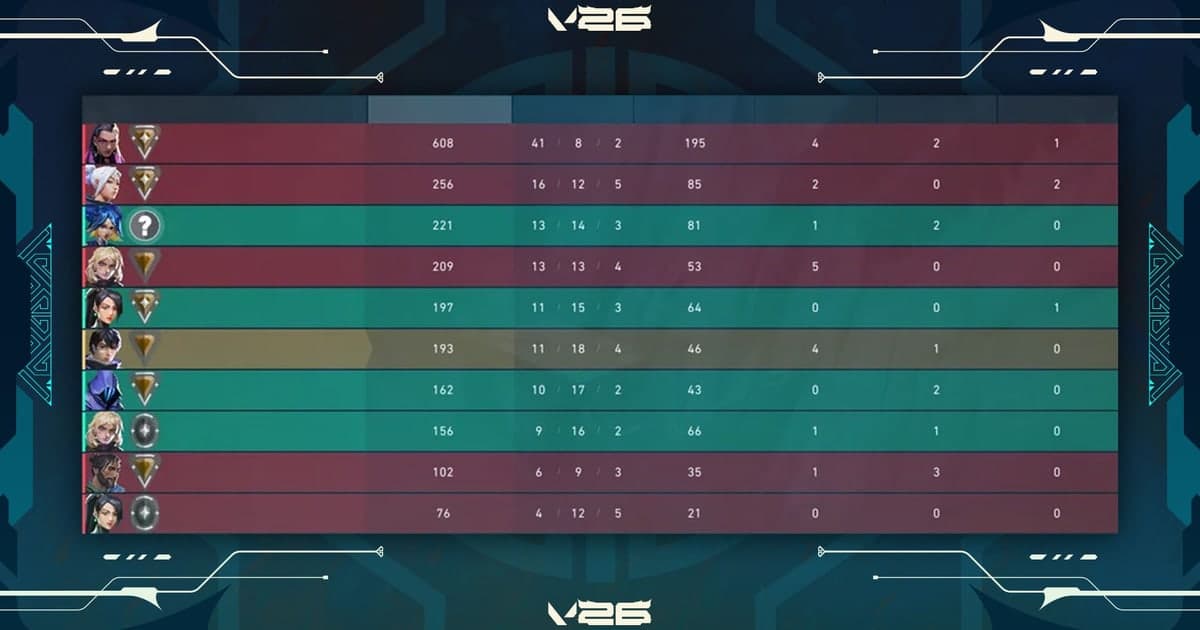
Riot does not publish a regular tier-by-tier player distribution for VALORANT. As checked on 14 September 2026, the last time a distribution chart appeared on an official Riot channel was the Ask VALORANT developer post of 27 August 2021, and even that showed only two images — the measured spread for Episode 3 Act 1 and the target spread for Act 2 — with no numeric table and Radiant left out. In the same post Riot noted that plenty of external websites track this data, and no tier percentage table has appeared in the support center or patch notes since. So when you see a claim that Silver is the top X percent, that number comes from a tracker site's own sample, not from Riot. Rather than copying figures nobody can verify, this article covers what the official documentation actually fixes: the tier order from Iron to Radiant, RR promotion and demotion rules, regional Immortal and Radiant thresholds, the act placement structure, and the conditions you should filter for before trusting an estimate. If what you really want to know is why your rank has stalled, reviewing lost rounds in Riot's replay system is a far faster diagnosis than any percentile chart.
The call: there is no official distribution — what to trust and what to treat as an estimate
As of 14 September 2026, only three things can be called official. First, the ladder and RR rules: Iron, Bronze, Silver, Gold, Platinum, Diamond, Ascendant, Immortal and Radiant, with every rank except Radiant split into tiers 1 to 3. Second, the Radiant condition: you must reach your region's RR threshold and sit inside the top 500 of that region at the same time, which is why 'Radiant is the top X percent' cannot be answered — Riot does not publish per-region player totals, so there is nothing to divide by. Third, the placement structure: five placement games at the start of Act 1 and Act 4, one game for Acts 2, 3, 5 and 6. The current act is V26 Act 5, opened by Patch 13.04 on 18 August 2026, and some values below may change when Act 6 arrives. A few things are official only as direction. The January 2021 Episode 2 Act 1 notice said Riot would cut the Iron population sharply and grow Bronze through Platinum while leaving Diamond and Immortal roughly unchanged, with no figures attached; Patch 13.00 in June 2026 said only that RR calculations were adjusted so consistent winners feel less stuck. Treat tier percentages as a rough feel and check the rules that actually move your rank in the table below: the RR buffer, rank shields, and the fact that a single placement game can drop you. If a queue will not form because of a rank gap in your party, check the party row in the table first; if you would rather queue as a full group instead, continue with finding a VALORANT five-stack.
VALORANT tier order and RR rules (checked 14 September 2026)
| Rank (official name) | Tiers and RR | Promotion and demotion rules |
|---|---|---|
| Iron | Tiers 1-3, 0-100 RR per tier | Start at 50 RR in your placed rank. Promote at 100 RR with a minimum 10 RR buffer right after; lose once more at 0 RR and you demote |
| Bronze | Tiers 1-3, 0-100 RR per tier | Entering Bronze 1 grants two rank shields. A loss at 0 RR consumes one shield instead of dropping you to Iron (a Bronze 2 to Bronze 1 drop is not protected; dodges and remakes do not consume shields) |
| Silver | Tiers 1-3, 0-100 RR per tier | Same rules apply from Iron through Ascendant. After a demotion you start at a minimum of 70 RR in the tier below |
| Gold | Tiers 1-3, 0-100 RR per tier | If your hidden MMR is far above your rank, a double promotion such as Gold 1 straight to Gold 3 is possible |
| Platinum | Tiers 1-3, 0-100 RR per tier | RR gains are driven mostly by win or loss; round difference (a 13-2 win beats a 13-9 win) and personal performance such as damage and assists add a small amount |
| Diamond | Tiers 1-3, 0-100 RR per tier | MMR above your rank means bigger gains and smaller losses so your rank converges toward MMR; the reverse applies if MMR is below |
| Ascendant | Tiers 1-3, 0-100 RR per tier | Reaching Ascendant even once makes Riot Mobile MFA mandatory for the Competitive queue (now enforced in every region). The Ascendant band is the ceiling for a first placement |
| Immortal | Tiers 1-3; Immortal 1 starts at 10 RR and accumulates with no cap | Immortal 2 and 3 promotions use regional RR thresholds — KR/LATAM 90/150, NA 90/200, EU 100/200, APC 80/200, BR 100/230. Falling under the threshold demotes you. No rank decay (only leaderboard position slips) |
| Radiant | No tiers; top 500 of your region | Reach the regional RR threshold (KR/LATAM 200, NA 450, EU 500, APC 400, BR 340) and be inside the top 500 at the same time. One Competitive game every 7 days is needed to keep your leaderboard spot |
| Party rank gap (2-3 players) | Iron and Bronze up to Silver, Silver up to Gold, Gold up to Platinum, Platinum and above exactly one rank up | Four-player parties are not allowed. Five-stacks have no rank limit but lose 25%, 75% or 90% RR depending on composition and only match against other five-stacks. Immortal 1 and above can only queue solo, duo or as a five |
Filters to apply before trusting a tracker distribution
- The source is not a Riot document or patch note, so I read it labeled as an estimate
- It states whether the sample is accounts looked up on that site or the whole player base
- It names the snapshot act and patch (V26 Act 5 is live right now)
- It treats Radiant as the regional top 500 rather than folding it into a percentage
- It says whether regions (KR, NA, EU, APC, BR, LATAM) are combined or separated
- It says whether it counted current rank or act rank (the highest rank won in the act)
- I checked my own rank in the client's Career tab, not on an estimate
Preparing for an act reset and placements, in order
- 1Confirm which act is live from the patch notes — A year has six acts and the number of placement games depends on the act. Act 1 (season start) and Act 4 (mid-season) use five games; Acts 2, 3, 5 and 6 use one. As checked on 14 September 2026 the live act is V26 Act 5, started by Patch 13.04, and the next patch, 13.06, is scheduled for 22 September. The start dates for Act 6 and the 2027 season are not yet in any patch note, so look for the new-act line in the playvalorant.com patch notes yourself.
- 2Meet the Competitive unlock and MFA requirements early — Since Episode 4 Act 1, Competitive requires account level 20 or higher (accounts that played at least one Competitive match before that are exempt). Any account that has ever reached Ascendant, plus accounts suspected of being shared, must verify through the Riot Mobile app before queueing, and ordinary authenticator apps are not accepted. When verification is required the Start button is replaced by 'Verify Account'. Rollout finished on 28 October 2025 for BR, KR, LATAM and NA, 21 January 2026 for EU and 18 February 2026 for APAC.
- 3Read your position in the Career tab before placements — Your current rank, RR and act rank badge are shown in the client's Career tab and on your Player Card. The act rank is a separate value recorded as the highest rank you have won at in that act, so it can differ from your current rank. If you sit in tier 1 of any rank, check whether you still have rank shields. A new act does not lower your rank automatically, but the result of a single placement game can.
- 4Play placements knowing how RR converges — Win or loss matters most, a 13-2 win pays more than a 13-9 win, and personal performance such as damage and assists adds a little (barely at all from Immortal up). When hidden MMR is above your rank you gain more on wins and lose less on losses, so the rank converges toward MMR. RR lost to a confirmed cheater is refunded within the same act 24 to 48 hours after the ban, once you finish your next Competitive game, and is reduced if you have already promoted.
- 5Bank nine wins inside the act first — Act rank badges and reward eligibility begin at nine Competitive wins in the act, and the border evolves at 9, 25, 50, 75 and 100 wins. Gun buddies at mid-season and season end are awarded by your highest act rank. Immortal and Radiant players need one Competitive game every seven days to hold a leaderboard position, and at the start of a one-game placement act (the official article names Acts 2 and 3) RR is cut by 90 percent so every Radiant drops to Immortal and climbs back.
Ranked games only teach you if you keep them
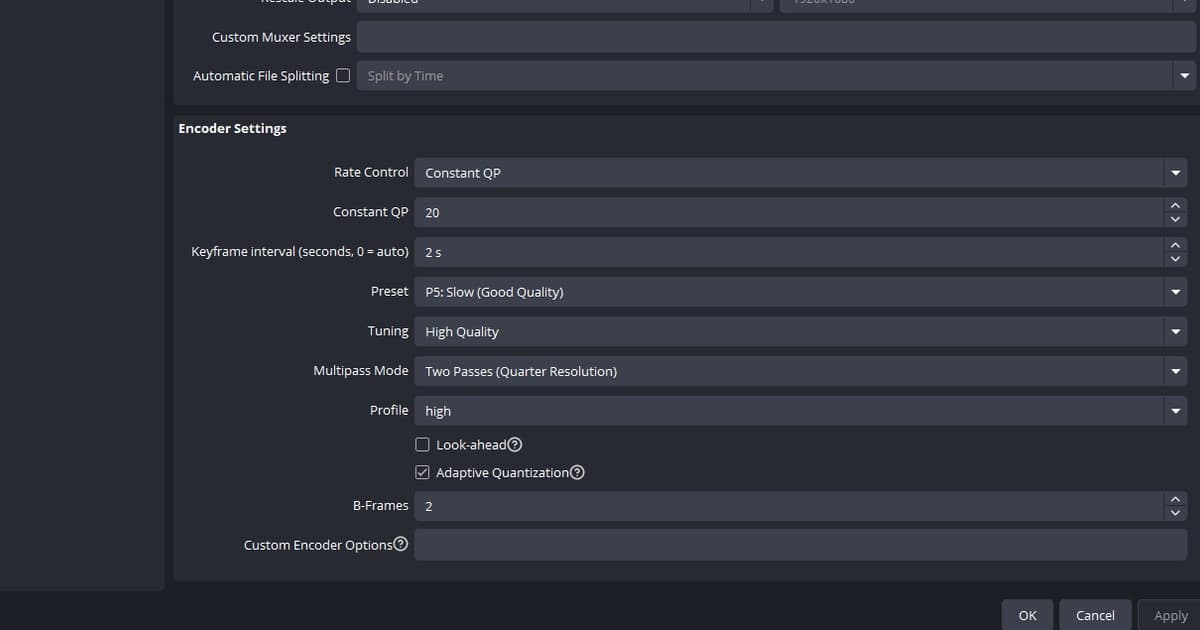
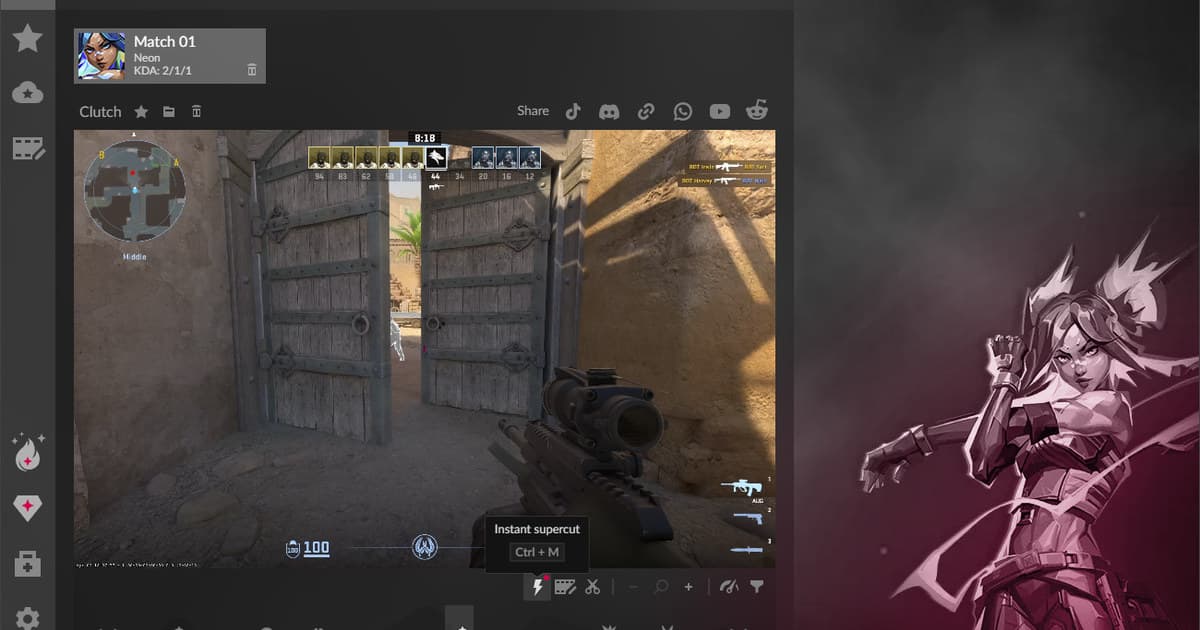
What raises a tier is review, not a distribution table. Riot's replay system supports Competitive, but only matches played on the current live patch can be opened (checked 14 September 2026: no clipping or sharing features), and replay files play only inside your own client, so once a patch lands the placement games from the previous act are gone. DOR is a free Windows desktop app that detects VALORANT automatically, records the full Competitive match as played, and cuts highlights such as kills into clips on their own, keeping them in the in-app library. NVIDIA NVENC hardware encoding is the default so the load during a match stays low, and game audio and your mic are captured together so you can hear which round the calls went wrong. Trim just the lost round in the browser clip editor, which needs no install, send it to your team as a dor.gg link and it plays in a mobile browser. Keeping all five placement games and revisiting the rounds you lost near 0 RR produces a far more concrete list of fixes than any percentile. Every VALORANT recording and clipping guide lives in the VALORANT hub, and the exact steps for saving kill clips are in how to clip VALORANT.
Sources and check date
Every rule in this article was verified against official Riot documentation on 14 September 2026. Tier order, the Competitive unlock condition, party rank gaps, five-stack RR penalties and the absence of rank decay are in the VALORANT Competitive Mode FAQ; RR rules, rank shields, regional Immortal thresholds and act rank rewards come from the RR articles in the same support center (updated 20 December 2025, 31 March 2026 and 2 June 2026). The last distribution chart Riot published, in Ask VALORANT, 27 August 2021, has no numeric table, excludes Radiant, and states that external websites track this data. The current act (V26 Act 5) comes from the Patch 13.04 notes, and the replay limits from the September 2025 replay developer post and the Patch 12.10 notes. The playvalorant.com web leaderboard read 'temporarily unavailable' at check time, with leaderboards viewable only in the client. Thresholds and placement rules can change when an act rolls over, so re-check the links above.