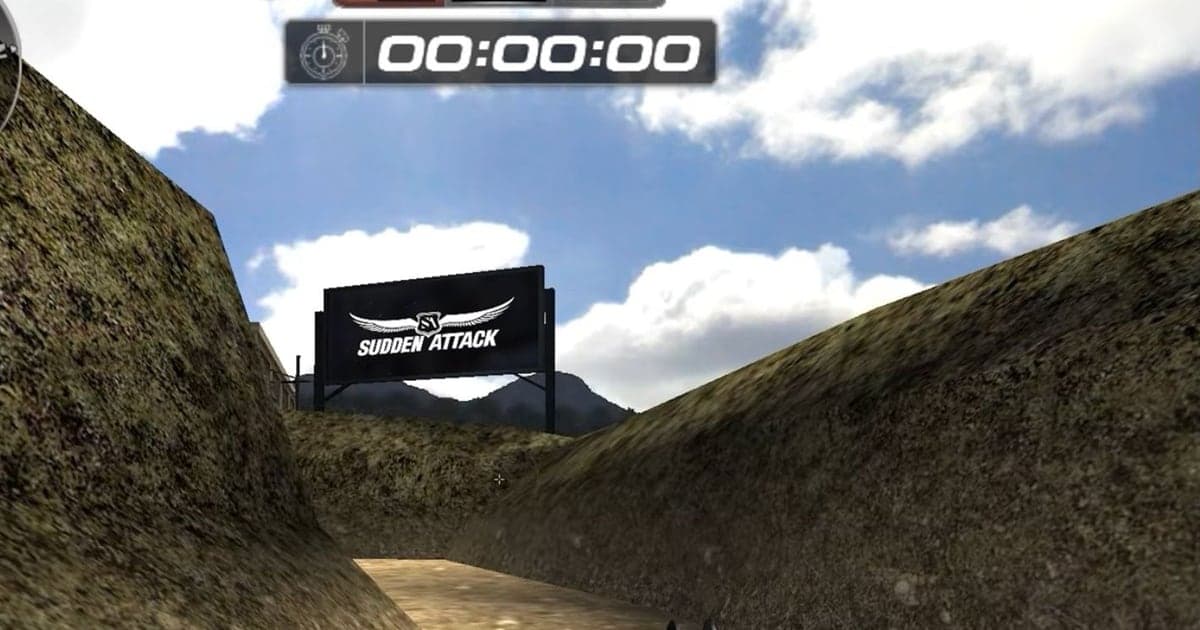
Sudden Attack has been running for over two decades, so it is tempting to assume any modern PC handles it without a second thought. In practice, a mismatched resolution blurs the picture, the wrong screen mode slows alt-tabbing, and outdated drivers can make an old game stutter on new hardware. One note on context: the game's live service runs in Korea under Nexon, and regional services elsewhere, including Japan's, closed years ago — so this guide is based on the Korean official game guide. It copies that spec table as-is, then walks through in-game graphics options, NVIDIA Control Panel settings, and a borderless-style windowed setup, ending with a simple test for whether your PC can record clips on top.
Remove bottlenecks before lowering quality
The officially recommended GPU is a GeForce 9600GT, which tells you how light this game is. If frames still stutter, the cause is usually a settings clash rather than a weak GPU. Check three things in order. First, does the in-game resolution match your monitor's native resolution? A mismatch hurts both sharpness and aim feel. Second, does the screen mode fit how you play? Fullscreen is the safe pick for input response, while windowed modes suit players who jump between the game, a stream, or their clips; running windowed at your monitor's native resolution behaves much like borderless fullscreen. Third, are your graphics driver and DirectX current? Nexon's own guide tells players to install both alongside the client. Only after these three are settled do quality options deserve your time.
Official Sudden Attack system specs (Nexon game guide)
| Item | Minimum | Recommended |
|---|---|---|
| OS | Windows 10 or later | Windows 10 or later |
| CPU | Intel Core2 Duo E6300 | Intel i5-2500 |
| Memory | 2 GB RAM | 8 GB RAM |
| GPU | GeForce 7600GT | GeForce 9600GT |
| Storage | 40 GB or more | 40 GB or more |
| DirectX & network | DirectX 9 or later · VDSL or faster | DirectX 9 or later · VDSL or faster |
Pre-flight checklist
- Confirm the game resolution equals your monitor's native resolution — a mismatch can blur the image or crop the edges.
- Keep the graphics driver and DirectX up to date; older titles are the ones most often tripped up by stale drivers.
- Reserve disk space beyond the 40 GB install for the clips and full-match recordings you plan to keep.
- Close background browsers and launchers before playing — it matters most on machines near the 2 GB minimum.
Five settings steps that protect your frames
- 1Match resolution to your monitor — In the game's graphics options, set the resolution equal to your monitor's native resolution. A sharp picture is itself a setting that affects how accurately you aim.
- 2Pick a screen mode on purpose — Choose fullscreen if input response comes first. For a borderless-style setup, pick windowed mode and set the resolution to match your monitor — window switching gets noticeably faster. Option names can differ between client versions.
- 3Trim effect-heavy quality options first — The engine is light, so quality options cost little — but if you still want more frames, lower the visual-effect options first. Fewer effects blocking your view also makes fights easier to read.
- 4Set a per-game NVIDIA profile — In the NVIDIA Control Panel's 3D settings, set power management to prefer maximum performance and turn V-sync off unless you need a frame cap. A per-game profile keeps other games unaffected.
- 5Grade your PC and check recording headroom — Compare your machine against the table and confirm you sit at or above the recommended tier (i5-2500, 8 GB RAM). Add an NVENC-capable GPU and you are ready to record while you play.
Once settings are done, let full-match recordings collect themselves
DOR is a free clip app for Windows. It detects Sudden Attack automatically and keeps a recording of the full match, with NVENC GPU encoding as the default so the load on the game stays low; to keep a highlight such as a kill, open that full-match recording from the library in the browser-based editor and cut the moment out yourself. The clip you cut can be shared with a dor.gg link, which also plays in a phone browser. The step-by-step setup for this game lives in the Sudden Attack recording guide, and if you want recording to cost even less GPU, see how to reduce recording GPU load.
Official source
The spec figures in this article come from the game spec page of Nexon's official Sudden Attack game guide, checked on August 21, 2026. See the official spec page (in Korean). In-game option layouts and names can change with client updates, so treat the latest client as the source of truth for menus.